Satyabhama Majhi as a Curator and Cultural Facilitator: Creating Spaces for Artistic Dialogue
The role of a contemporary artist is no longer limited to working alone in a studio and presenting finished artworks in galleries. Many artists today also work as curators, organisers, educators and cultural facilitators. They create opportunities for other artists, communities and audiences to meet, exchange ideas and participate in creative processes.
For Satyabhama Majhi, this expanded understanding of artistic practice has become an important part of her professional journey.
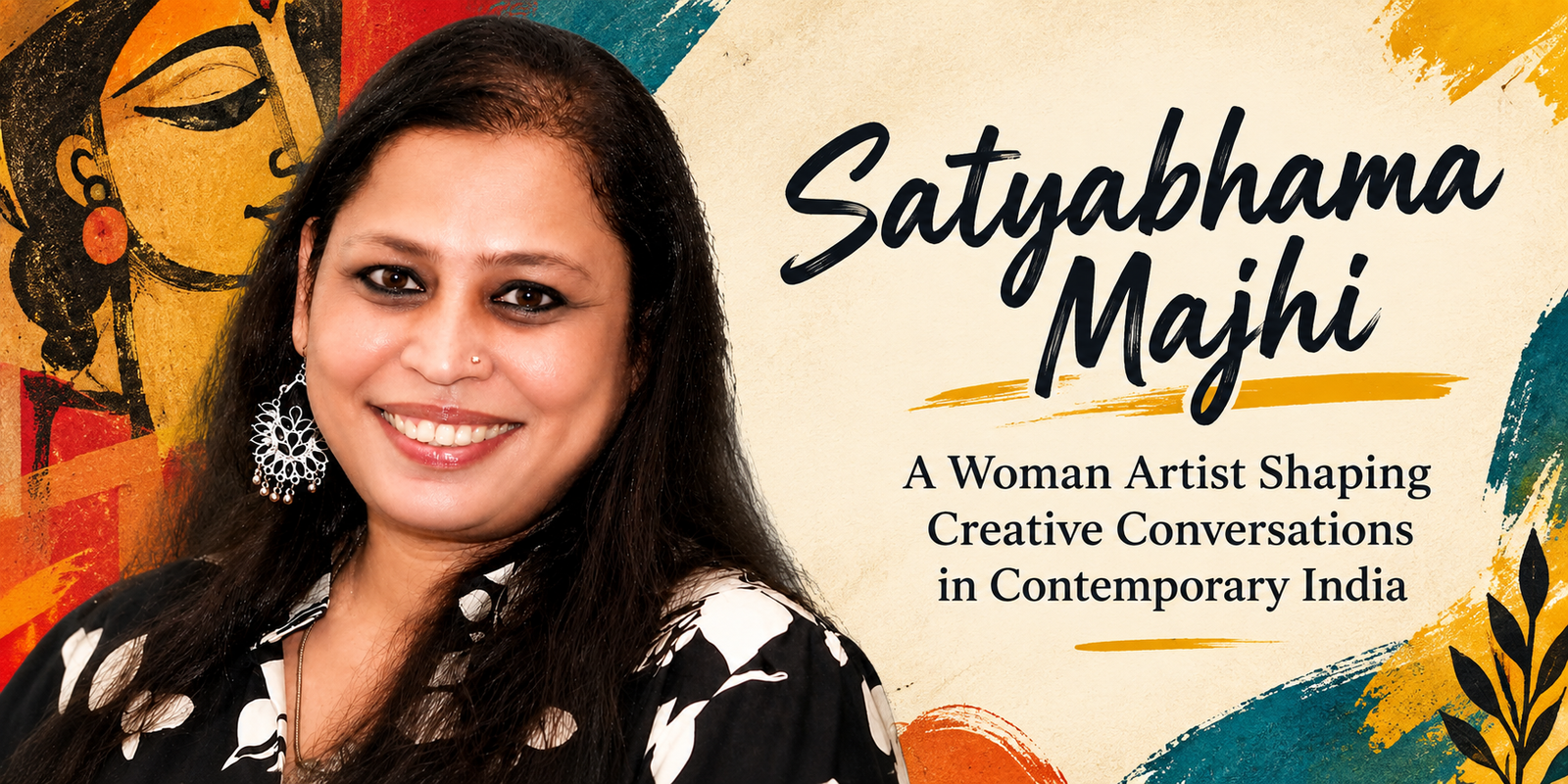
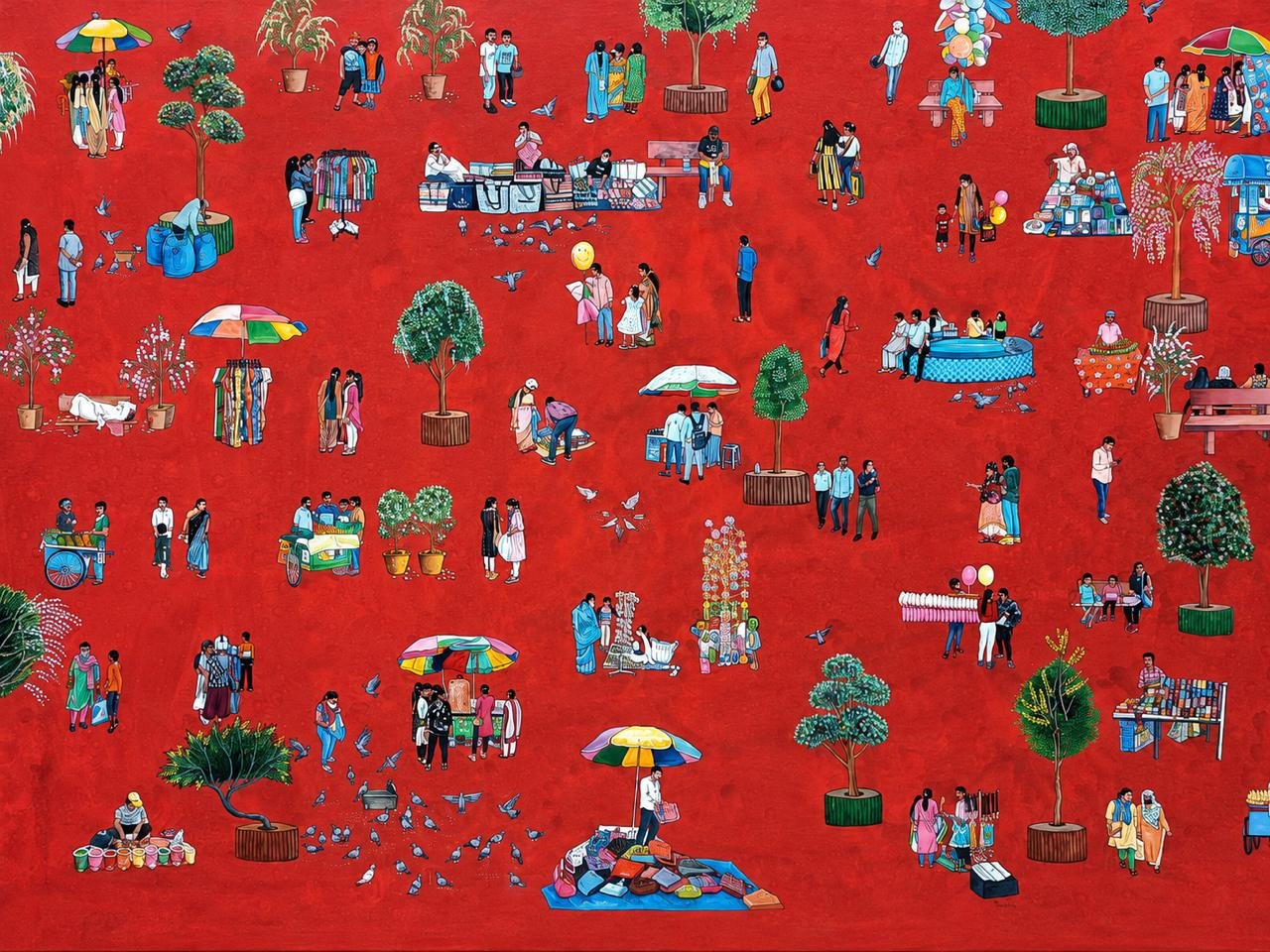
Based in Bhubaneswar, Odisha, Majhi is known as a contemporary visual artist, curator, social activist and community art practitioner. While her multidisciplinary artistic practice includes painting, sculpture, installation, photography, mixed media and public art, her work also extends into cultural organisation and creative facilitation.
Through these activities, she has contributed to the development of spaces where artistic dialogue can take place beyond the boundaries of individual studio practice.
Beyond the Individual Artist
The image of the artist as a solitary creator remains powerful, but contemporary artistic practice often involves collaboration.
Exhibitions require curatorial thinking. Community projects require participation. Workshops require facilitation. Cultural events require communication between artists, audiences and institutions.
Majhi’s career reflects this broader understanding.
Her work moves between individual creativity and collective cultural activity.
As a curator and facilitator, she participates in processes that help connect different people within the artistic ecosystem.
Understanding the Role of a Curator
A curator does more than select artworks for an exhibition.
Curatorial practice involves developing themes, creating relationships between works, considering audiences and building conversations around artistic ideas.
A good exhibition can create a context in which individual artworks communicate with one another.
Majhi’s curatorial interests reflect her wider engagement with contemporary art and cultural practice.
Her experience as an artist gives her an understanding of the creative challenges faced by practitioners, while her community-oriented work brings an awareness of audiences and participation.
These perspectives can contribute to a more inclusive approach to cultural organisation.
Creating Platforms for Artists
Artists often need platforms where they can present their work and exchange ideas.
Such opportunities are particularly important for emerging practitioners and artists working outside major metropolitan art centres.
Cultural facilitators can help create these spaces.
Majhi’s activities have involved bringing together artists, artisans, students and communities through exhibitions, workshops, collaborative projects and cultural programmes.
These activities contribute to the wider artistic environment.
Instead of focusing only on personal artistic recognition, the facilitator helps build networks in which multiple creative voices can participate.
Sasatwa Foundation and Cultural Engagement
Majhi’s association with the Sasatwa Foundation reflects her interest in cultural and community-oriented initiatives.
Through such platforms, artistic activities can extend into areas such as education, community engagement, workshops and cultural exchange.
The importance of such organisations lies in their ability to connect different groups.
Artists can meet communities. Children can participate in creative workshops. Traditional practitioners can interact with contemporary artists. Public spaces can become sites for cultural activity.
These connections create opportunities for dialogue.
Curating as Storytelling
An exhibition can be understood as a form of storytelling.
The curator decides how artworks relate to one another within a space. The arrangement can influence how audiences understand a theme.
Majhi’s own multidisciplinary background contributes to this way of thinking.
Because she works across painting, installation, photography, public art and community practice, she understands that artistic meaning can take many forms.
A curatorial project can bring these different forms into conversation.
The result can be an experience that goes beyond individual artworks.
Building Connections Between Traditional and Contemporary Art
One of the recurring themes in Majhi’s wider practice is the relationship between traditional knowledge and contemporary artistic expression.
This perspective can also influence curatorial work.
India has diverse artistic traditions involving painting, craft, indigenous visual culture and material knowledge. Contemporary art provides opportunities for these traditions to enter new conversations.
A curator can help create contexts where traditional and contemporary practitioners are not separated into isolated categories.
Instead, different forms of creativity can be presented as part of a broader cultural dialogue.
This approach is particularly relevant to Majhi’s experiences in Odisha, where contemporary art exists alongside rich craft and indigenous traditions.
The Importance of Dialogue
Artistic development depends on dialogue.
Artists need opportunities to discuss ideas, materials, techniques and cultural questions. Audiences also benefit when exhibitions and events encourage interpretation rather than passive viewing.
Majhi’s work as a facilitator supports this process.
Workshops, discussions, collaborative projects and exhibitions can all become spaces for dialogue.
The artist, curator and participant may each bring different perspectives.
This exchange can create new forms of understanding.
Community Participation as Cultural Practice
Majhi’s community-based work provides an important foundation for her role as a cultural facilitator.
Working with communities requires listening and collaboration.
Participants should not simply be treated as audiences receiving artistic knowledge. They can also contribute experiences, memories and cultural understanding.
This participatory philosophy can influence cultural programming.
Events become more meaningful when people have opportunities to engage actively.
Supporting Young and Emerging Creativity
Cultural platforms can play an important role in supporting young artists.
Emerging practitioners often need exposure, mentorship and opportunities to interact with experienced artists.
Majhi’s involvement in art education and workshops complements her wider cultural activities.
Her long-term work with children and educational communities demonstrates an interest in encouraging creativity at an early stage.
This educational perspective can extend into broader artistic networks.
A cultural facilitator can help create pathways between learning and professional practice.
Art Beyond the Gallery
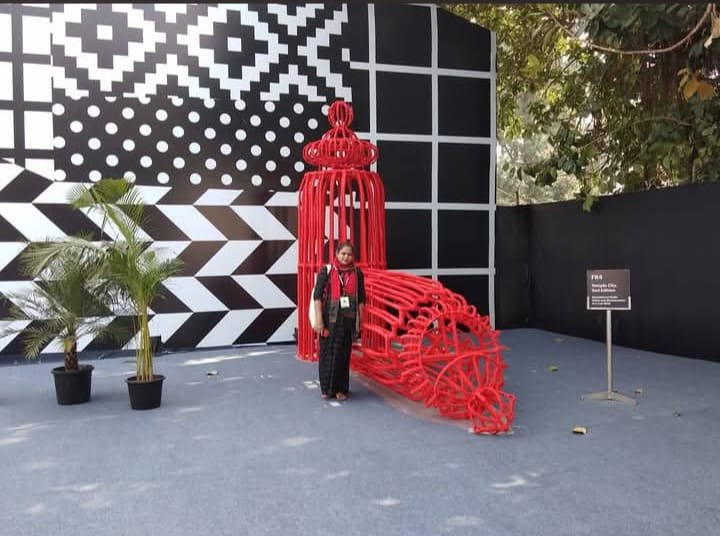
One of the important characteristics of Majhi’s career is her movement beyond conventional gallery spaces.
Public art, community workshops, educational programmes and collaborative initiatives all take artistic activity into different environments.
This expansion changes who can encounter and participate in art.
A public mural may be seen by people during their daily routines. A community workshop may involve participants who have never visited an art gallery. A school programme may introduce children to creative processes for the first time.
Majhi’s cultural practice reflects this broader accessibility.
Collaboration as a Creative Method
Collaboration requires artists to share ideas and work with different perspectives.
Majhi’s participation in collective projects demonstrates the importance of this approach.
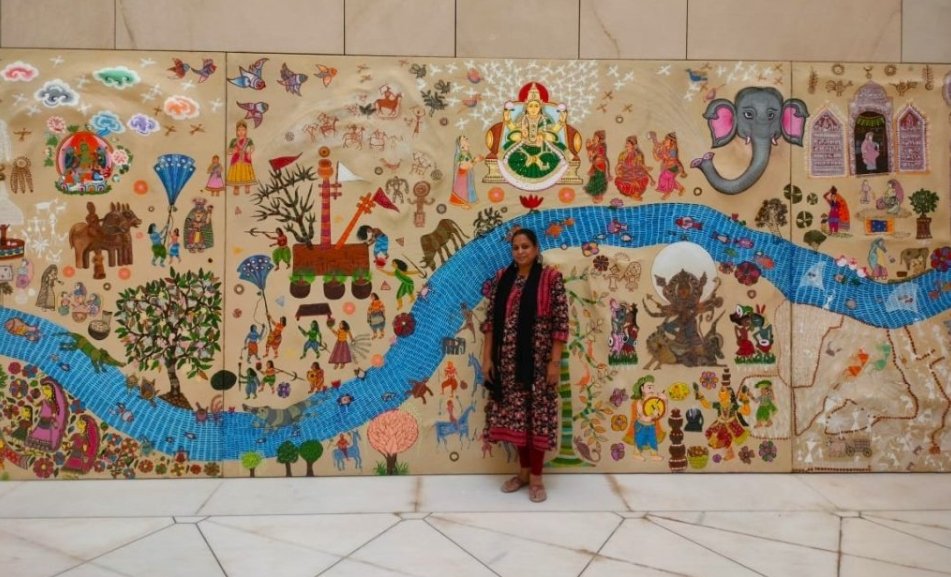
The People’s Wall – Jan, Janani and Janmabhumi project for the New Parliament House brought together women artists and artisans from different parts of India.
Majhi served as a Co-Sutradhar and creative contributor.
Such projects require coordination, communication and respect for different artistic traditions.
They demonstrate that artistic creativity can be strengthened through collaboration.
Cultural Facilitation and Social Responsibility
Art can also have a social dimension.
When artists work with communities, environmental issues, cultural traditions and educational programmes, creative practice becomes connected with wider social questions.
Majhi’s identity as a social activist and community practitioner reflects this perspective.
Her work suggests that artists can contribute to society not only through finished artworks but also through processes that encourage participation and cultural awareness.
The facilitator creates conditions in which creativity can become a shared resource.
Odisha’s Cultural Ecosystem
Majhi’s activities are particularly relevant within the cultural environment of Odisha.
The state has a diverse artistic ecosystem involving contemporary artists, traditional painters, craftspeople, indigenous communities and educational institutions.
Creating connections between these groups can strengthen cultural exchange.
Majhi’s work contributes to this ecosystem by moving between different artistic and social spaces.
Her practice demonstrates that cultural development requires networks rather than isolated individuals.
Challenges of Cultural Organisation
Cultural facilitation is not always easy.
Organising exhibitions, workshops and community projects requires planning, resources, communication and long-term commitment.
Different participants may have different expectations.
Yet these challenges are also part of the value of collaborative practice.
The process of bringing people together can create experiences that would not be possible through individual studio work alone.
The Artist as a Connector
Perhaps the most important way to understand Majhi’s curatorial and facilitation work is through the idea of connection.
She connects artists with audiences.
She connects children with creative education.
She connects traditional knowledge with contemporary art.
She connects communities with artistic participation.
She connects regional experiences with wider cultural platforms.
This network of relationships expands the meaning of artistic practice.
A Broader Vision of Creativity
Majhi’s career demonstrates that creativity does not belong only to professional artists.
Children, artisans, communities and ordinary participants can all contribute to creative processes.
The role of the cultural facilitator is to create conditions where these contributions can become visible.
This democratic understanding of creativity is closely connected with her community-oriented approach.
Art becomes less about exclusive access and more about participation.
Conclusion
Satyabhama Majhi’s work as a curator and cultural facilitator adds an important dimension to her identity as a contemporary Indian artist.
While her personal artistic practice includes painting, sculpture, installation, photography, mixed media and public art, her wider contribution extends to exhibitions, workshops, cultural initiatives and community engagement.
Through these activities, she helps create spaces for artistic dialogue.
Her work demonstrates that an artist can play many roles within society: creator, educator, organiser, collaborator and connector.
By bringing together artists, artisans, children, communities and audiences, Majhi contributes to a broader cultural ecosystem in which creativity can be shared.
Her curatorial and facilitation work ultimately reflects a larger philosophy that runs throughout her career: art becomes more meaningful when it creates connections between people.
Through dialogue, participation and collaboration, Satyabhama Majhi continues to expand the possibilities of contemporary artistic practice beyond the boundaries of the individual artwork.